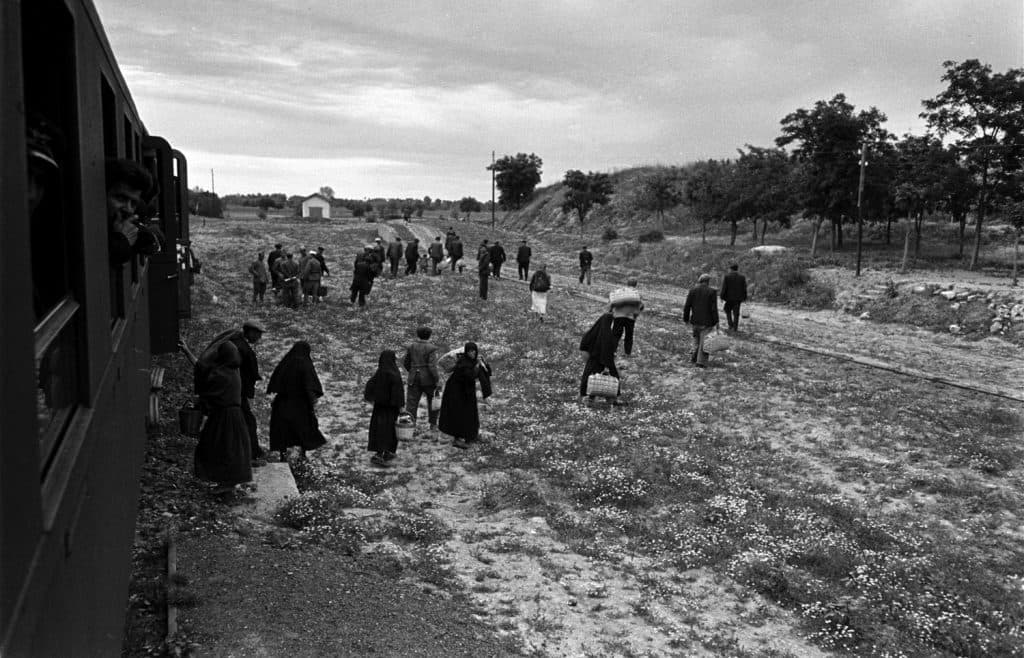
The Game
The road doesn't care what you are
The Hidden is a folk horror tabletop roleplaying game set in 1930s America, where another world has always existed in plain sight beside our own.
Dismissed throughout history as folklore, it never disappeared. It simply continued to live among us.
Some of The Hidden have travelled the roads for generations. Others have never left the places they call home. Why they travel, or why they remain, is as varied as The Hidden themselves.
You might play one of The Cursed — one of The Hidden whose origins lie in folklore, old stories or ancient curses. They have survived by living quietly alongside the modern world as it grew around them.
Or you might play one of The Damned. Human, but no longer living an ordinary life. Some stumble into this world and discover something they were never supposed to know existed. Others are invited onto the road by those who recognise a use for them. They are rarely the respectable ones.
A doctor struck from the register whose talents are still useful if nobody asks too many questions. A killer moving from town to town. A thief. A confidence man. An outlaw. Someone with nowhere respectable left to go.
However they arrived, they now travel roads most people never realise are there. Human and otherwise travel the same roads.
Some need to kill to survive.
Some choose to.
Some never will.
You are one of The Hidden. Whether one of The Cursed or one of The Damned, you travel the roads of 1930s America through a world most people never realise they share. The same towns, railways and boarding houses are seen by everyone, but never in quite the same way. What most people dismiss as folklore is simply part of everyday life to those who belong to The Hidden.
Walk into a Neutral Ground — one of the few places every member of The Hidden can meet under an absolute truce. Share a drink with another crew knowing that, the moment everyone walks outside, they are planning to hunt yours down. Negotiate with something far older and more dangerous than your crew because it has what you need and wants something done in return. Cross into another region and encounter a completely different expression of The Hidden, shaped by the folklore, history and landscape of that part of America. Whatever waits beyond the next stop is waiting to be discovered.
The Road does not judge you. But the world notices what you do.
A body found behind a boarding house may interest a sheriff. Enough trouble across a county may interest the state. Keep leaving the same kind of stories behind and eventually somebody further up the chain begins putting them together.
Local.
State.
Federal.
Attention grows because of what the characters do, where they do it, what they leave behind and whether patterns begin to emerge.
The people travelling these roads have their own signs and marks, a language older than the hobo code that would later appear across America's railways. To most people they are nothing more than scratches on a fence post or markings on a bridge. To those who know them, they reveal where safety can be found, where danger waits, who can be trusted, where another crew passed through, or simply that it is time to keep moving.
The Road is open.
What you do on it is yours.
Character creation
You don't roll a character.You build one through questions.
Character creation begins with questions. Some every player must answer. Others are chosen from groups, allowing you to decide which parts of your character's history, nature and experience will shape them.
The answers build the mechanics of the character. But nothing comes alone.
Every strength has another side. The experiences, choices and circumstances that made somebody capable may also have left weaknesses, limitations or consequences behind. The questions build both.
You are not choosing a set of numbers and then writing a person around them. The person you create produces the numbers.
Choose a road
The whole of America is in play. The full-size map connects every region into one continuous campaign world, so a crew can begin in the Pacific Northwest, cross the country and reach Florida without leaving the same campaign behind.
Each region is built to support months of play on its own. Principal stops, side routes and the roads between them give the Storyteller enough material for a long campaign, while every route remains connected to the wider country.
A crew may remain within one region, leave after a single stop, double back months later or keep moving across America. Nothing resets at a regional border. Relationships, attention and everything the crew has done travel with them.
The maps do not prescribe a story. They give the Storyteller a country to work with and a connected road that can continue for as long as the campaign does.
You still have to get there
Choosing the next stop does not put the crew there. They must pay for the safer route, take the chance of jumping aboard a freight car, earn passage, call in a favour or find another way.
A ticket costs money but gives the crew more control over the journey. Freight costs nothing, but they rarely know who is already riding in the car, where they may be thrown off or what attention the attempt may attract.
Missing the train matters. So does being caught, losing the fare, owing someone for passage or stealing the vehicle that solves the problem.
The journey is not a gap between scenes. Getting there is play.
The journey accumulates
What happens at one stop does not end when the crew leaves. Relationships, promises, favours, debts, injuries, attention and unfinished business remain part of the campaign.
Among The Hidden, money often carries less weight than value. What matters depends on who is asking, what they need, what the crew can offer and what both sides are willing to agree to. An exchange may settle something now, create an obligation for later or change a relationship completely.
The crew may owe something, be owed something, refuse the exchange, set its own terms or walk away. None of this sits outside the story as a separate currency system. It becomes material the Storyteller can return to because it came directly from what happened at the table.
Stops become history. What happened there changes relationships and alters what remains possible later. By the end of a route, the campaign belongs to that table because it has been built from everything the crew carried forward.
The map gives you the road.
What happens on it becomes your campaign.